You have an interview this afternoon, another application form to finish, and a recruiter waiting for a reply. Career helps you carry the same experience through all three, without starting over each time. Start with facts you know are true and stories about work you have done. Use them across your search, then keep each job’s posting, answers, interview preparation and messages in its own workspace.

Two places, two purposes

Career in the sidebar is for your whole search:
  • Today brings together reminders, new roles and your next interview.
  • Coach is a conversation about your search across jobs.
  • Knowledge holds your facts, stories and preferences.
  • Offers compares saved offers side by side.
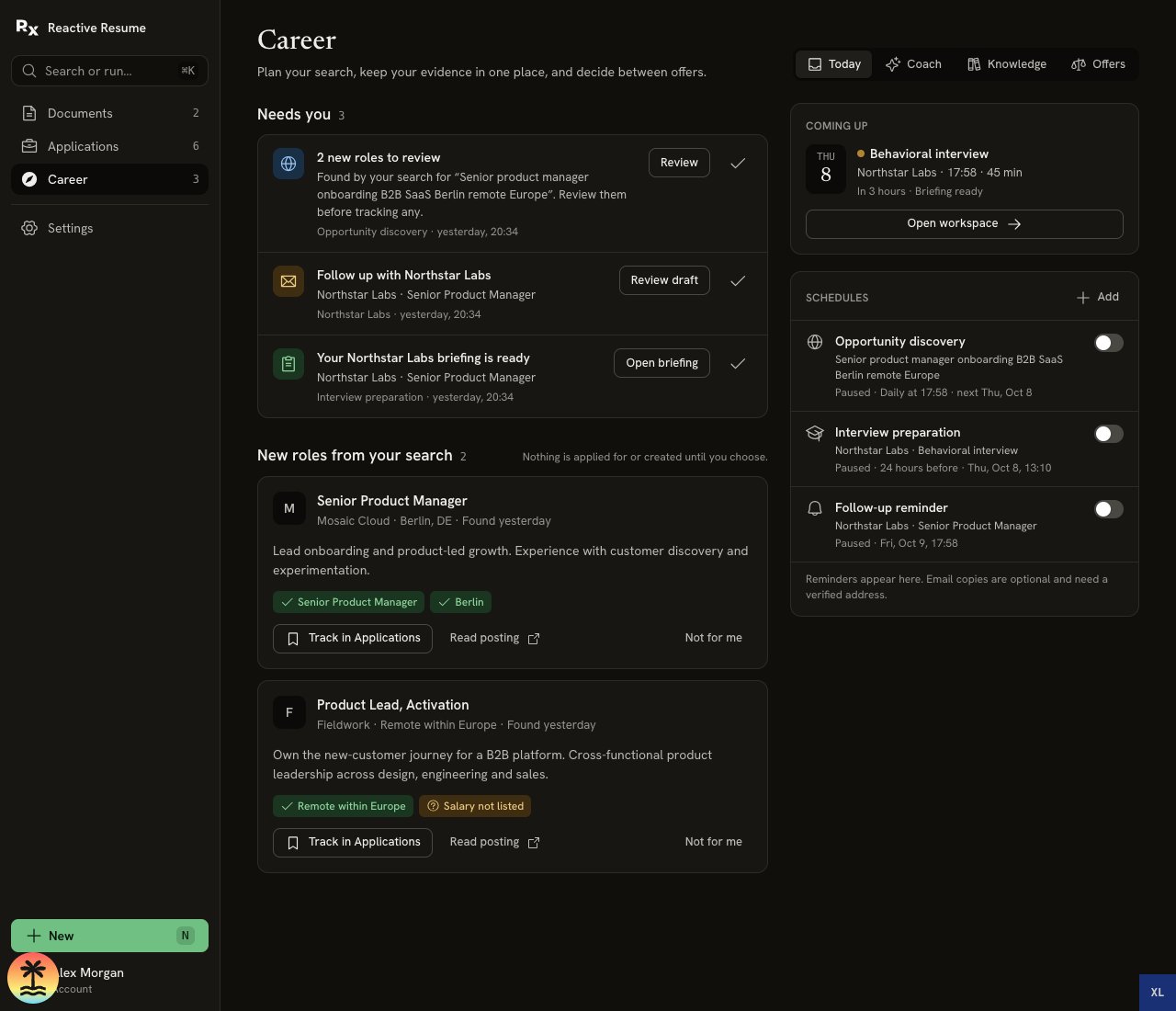
Applications is your job tracker. Open an application and select Open workspace for tools dedicated to that job: Fit, Apply, Prepare, Practise, Debrief, Messages and Saved. Ask the coach opens a conversation beside the tab you are using, with that application’s context.
Career Today showing a ready interview briefing, follow-up reminder, two discovered roles, an upcoming interview and paused schedules

Today brings together what needs you, roles to review and your next interview. This example uses fictional people and companies; its schedules are paused.

Keep your experience honest

A fact is something you state or confirm, such as what you did, when you did it, or a result you measured. A story puts that experience into five parts: Situation, Task, Action, Result and Reflection. Link stories to the facts that support them. These are your records, not independent checks by an employer or a background-check service. You decide whether each fact is accurate. Leave a story’s Result blank when you cannot support it. If you correct a linked fact later, the story is flagged for review. Fit shows the evidence behind each requirement. No evidence yet means your Knowledge does not show it; it does not mean you cannot do the job. A related experience can be useful without becoming a claim that you have done something you have not. AI drafts are built from the experience you supply. Read them before using them, especially names, dates, your personal contribution and results. Build your Knowledge, or check a role when your experience is different.

Tell it once, use it again

The same shared fact or story can help with an application answer, an interview opening, a practice answer or a recruiter reply. You still review each draft for its audience. Job-specific notes stay with that application. A fact marked private to one application stays in that scope until you choose Use for all applications. Shared Knowledge lets you reuse experience without treating every conversation with an employer as a fact about every job.

Let scheduled work help

Enable schedules when you want discovery searches, interview briefings or follow-up reminders to run while your browser is closed. Results wait in Today for you to review. Finding a role does not apply for it; reading a message does not send a reply. Schedules need a working installation and the relevant connections. Discovery checks that new results are individual open postings when it reads them. A posting can close afterward, and a search may find few or no new roles. Set up a quiet search or prepare for interview day.

Choose your AI and control your data

Reactive Resume is free and open source. You can use your own AI connection, including OpenAI, DeepSeek, Google Gemini or another supported provider, and choose a default. Provider usage can cost money; it is billed through the connection you use. Connect an AI provider. Each AI action has a line explaining what it sends and which connection receives it. In the coach, context controls let you choose what accompanies the next message. Knowledge editing and the offer comparison itself do not send an AI request. Previously sent information remains subject to your provider’s policies. You can correct facts, switch them off for coaching, forget them, and export your account data. You can also self-host Reactive Resume. See controls and data reference for the different effects of these actions.

Start with the task in front of you